


Boiler Feedwater Control Valves: Function, Application and Design Considerations
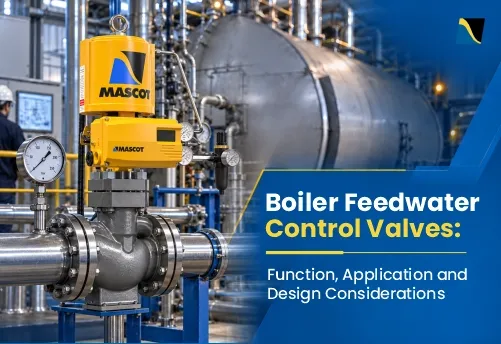
A boiler feedwater control valve regulates water flow into the boiler drum or shell to match steam demand and maintain the operating water level. Too little water can expose heat-transfer surfaces to overheating; too much can cause water carryover into the steam system and damage downstream equipment. Feedwater service can impose high differential pressure, frequent […]
Control Valve Selection for Blue vs. Green Hydrogen Production

A control valve must not be selected based only on the fact that the plant is making hydrogen. A plant making blue and green hydrogen makes use of valves exposed to different fluid, pressure, temperature, and cycling conditions, even though they both make the same gas. Blue hydrogen is made through steam methane reforming (SMR) […]
Why Are Extended Bonnets Used in Cryogenic Valves?

A cryogenic valve often looks noticeably different from a standard process valve. Between the body and the actuator sits a long, narrow section that ordinary valves don’t have. That section is the extended bonnet, and it is not there for appearance. It helps the valve operate reliably when handling extremely cold fluids such as LNG, […]
Control Valve Sizing: How to Calculate Cv and Avoid Oversizing
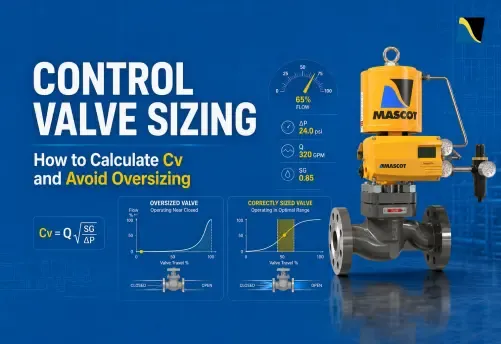
A control valve can pass the required maximum flow and still be the wrong valve for the application. If it operates near shutoff at normal load, the loop hunts. If the pressure drop exceeds the choked flow limit, increasing demand produces noise and trim erosion, not more flow. If the valve takes an insufficient share […]
How to Choose a Cryogenic Valve: A Complete Guide

Cryogenic valve selection involves more than checking whether a valve can withstand a low temperature. Extremely cold fluids can change material toughness, seal behaviour, packing performance and dimensional clearances. The valve must continue to operate and maintain the required shutoff or control performance throughout the specified temperature and pressure range. Applications involving LNG, liquid nitrogen, […]
Control Valve Noise: Sources, Measurement & Engineering Solutions
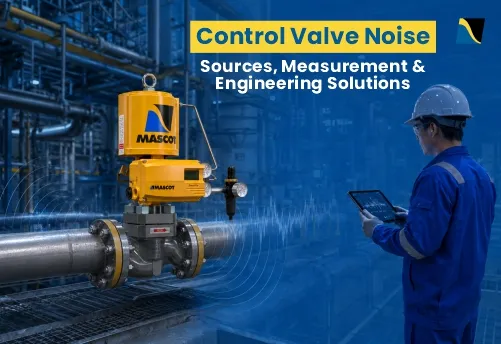
A noisy control valve is rarely just a noise problem. In most cases, the sound is a symptom of something happening inside the valve or the connected piping: excessive pressure drop, high velocity, cavitation, flashing, or a valve that was selected on line size rather than actual service conditions. Engineers who treat the noise instead […]
Key Factors to Consider While Selecting a Control Valve
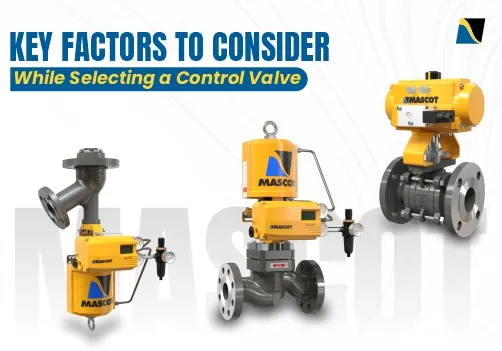
Selecting a control valve is an engineering decision, not a catalogue exercise. A valve that matches the pipe size or pressure rating can still cause poor control, cavitation, high noise, leakage, or frequent maintenance if it does not match the process conditions. Engineers must evaluate the full application before finalising the valve type, trim, actuator, […]
Pneumatic vs Electric Control Valve: Engineering Selection Guide for Process Industries
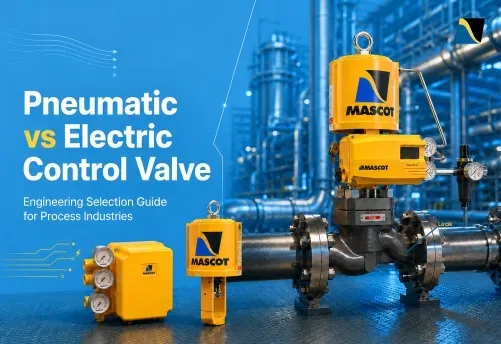
Choosing between a pneumatic and an electrically actuated control valve is not a preference question. It is an engineering decision with real consequences for response time, process safety, loop performance, maintenance intervals, availability of utilities to operate the valve and total installed cost. Both types serve the same fundamental purpose: to convert a control signal […]
Spring-Cylinder vs Diaphragm Actuators: A Practical Comparison

Why the actuator choice matters The actuator determines how effectively a control valve converts a signal into motion. It governs responsiveness, shut-off tightness, and loop stability — making it as critical as the valve body or trim itself. Across most process industries, two pneumatic types dominate: spring-cylinder (piston) and diaphragm. Both modulate flow, but they […]
Pressure Control vs. Flow Control — Understanding How a Control Valve Does Both

Introduction – One Valve, Two Functions In process industries, every automation loop aims to control a measurable variable – typically pressure, flow, temperature, or level. While different in purpose, these loops often rely on the same element: the control valve. Whether the goal is to maintain pressure or regulate flow, a properly designed control valve […]
